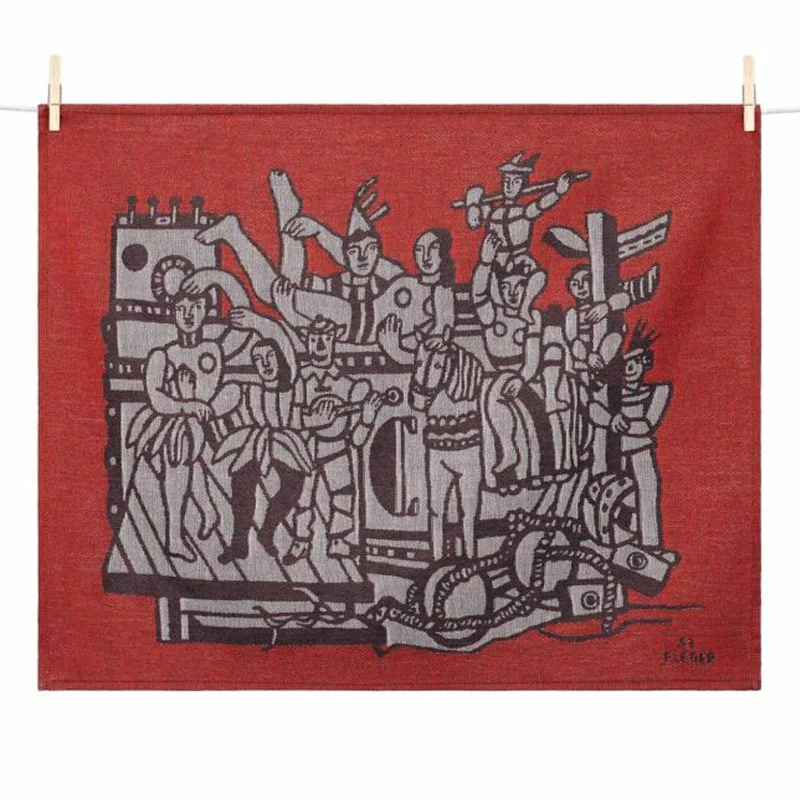
The Grand Parade (La grande parade) Tea Towel, by Tissage Moutet
With this tea towel, Moutet Tissage reinterpret Fernand Léger’s painting 'La Grande Parade sur Fond Rouge'.
Beautiful designs and beautiful fabric - this tea towel is woven and made with love by Moutet Tissage in the Southwest of France.
- 50 x 70 cm
- Cotton
When Home manager Mark first laid eyes on the Moutet stall at Maison Objet in Paris, he knew we had to have them! Moutet linens are designed, woven and made entirely at their family factory in Orthez in the Basque region of Southwest France. These unique pieces are created by the fusion of using two very distinct looms: the Basque loom and the Jaquard loom. No-one else does this.
The term ‘Basque linen’ refers to fabric exclusively woven in the Pyrenees Atlantiques from natural fibres – cotton and linen – with stripes or geometric patterns. When Moutet introduced the jacquard loom in the 1950s it enabled them to create complex custom-made patterns which are loved in Michelin-starred restaurants and at prestigious cultural sites around the world – and most importantly, in domestic kitchens where they bring joy with their stunning colours and superb quality.
Description
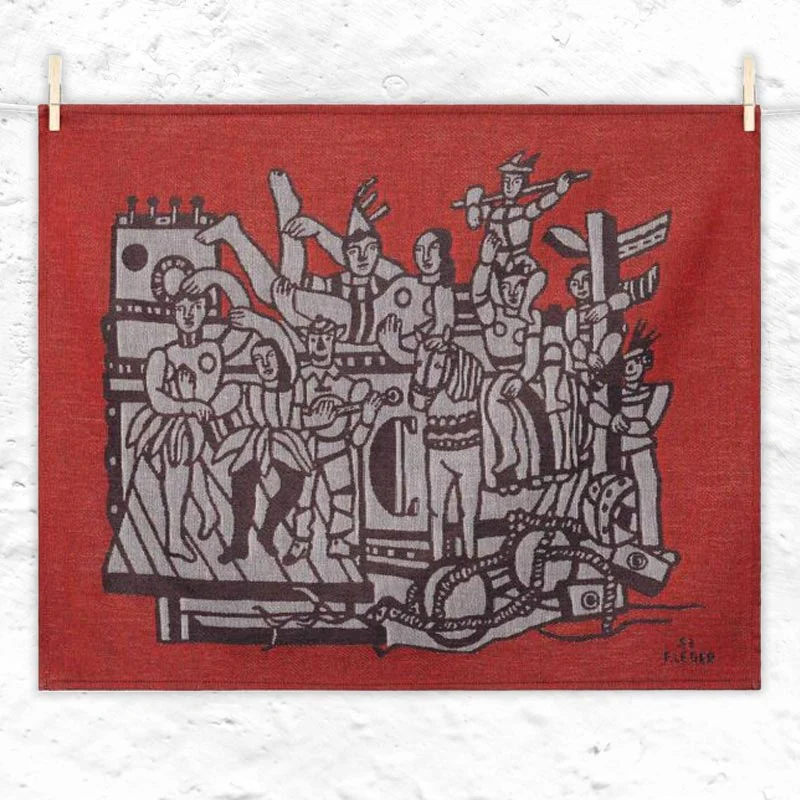
With this tea towel, Moutet Tissage reinterpret Fernand Léger’s painting 'La Grande Parade sur Fond Rouge'.
Beautiful designs and beautiful fabric - this tea towel is woven and made with love by Moutet Tissage in the Southwest of France.
- 50 x 70 cm
- Cotton
When Home manager Mark first laid eyes on the Moutet stall at Maison Objet in Paris, he knew we had to have them! Moutet linens are designed, woven and made entirely at their family factory in Orthez in the Basque region of Southwest France. These unique pieces are created by the fusion of using two very distinct looms: the Basque loom and the Jaquard loom. No-one else does this.
The term ‘Basque linen’ refers to fabric exclusively woven in the Pyrenees Atlantiques from natural fibres – cotton and linen – with stripes or geometric patterns. When Moutet introduced the jacquard loom in the 1950s it enabled them to create complex custom-made patterns which are loved in Michelin-starred restaurants and at prestigious cultural sites around the world – and most importantly, in domestic kitchens where they bring joy with their stunning colours and superb quality.